
 |
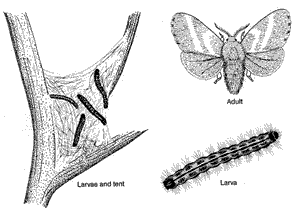
Tent caterpillars build silken tents in the branches of trees and shrubs, where they reside while they feast on foliage. These nests are usually built in the crotch between two limbs. Usually you will see the large dirty white tents before you see the caterpillars themselves.
Tent caterpillars do their dirty work in the spring. If you discover tents in your trees or shrubs in the late summer or fall, then you have a pest called Fall Webworm
About Tent Caterpillars
Two major species are recognized. The caterpillar of the eastern tent caterpillar (Malacosoma americanum) is hairy and black with white stripes on its back. Along its sides, you’ll see narrow brown and yellow lines and a row of blue spots.
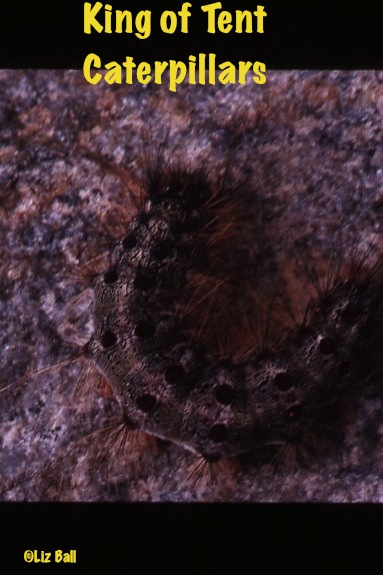 The caterpillar of the western tent caterpillar (Malacosoma californicum) is orange-brown with blue dots on its back and sides.
 Tent caterpillars soon grow to about 2 inches in length. The caterpillar is the larva of a moth that has beige to brown wings, which span about 1 1/4 inches. You will probably not see her. Tent caterpillars are found throughout the United States.
Their Growth Stages
In the fall, the female moths lay their eggs in a thick collar around twigs and give them a protective coating. The 200 to 300 eggs have a brown, varnished appearance. Soon after hatching in the early spring, the larvae will spin their distinctive tents in forks and crotches of trees and shrubs. They retire to the tent at night and in rainy weather, and spread out during the day to chomp on leaves. The leaves may be stripped from all branches within about 3 feet of these tents. When food runs low, many of the caterpillars leave the tent and form cocoons on the ground or on tree trunks, fences, and house siding. Adult moths succeed in hatching from only a few of these cocoons. The rest have been taken by small animals, or insect parasites. The surviving adults mate and lay new egg masses.
