
Struggling with Marigold Issues?
You’re Not Alone! Marigolds are known for their resilience and beauty, yet they can face stubborn issues that leave even the most seasoned gardeners frustrated. If you’ve been wondering why your marigolds aren’t thriving—why leaves are discolored, blooms aren’t appearing, or pests keep returning—rest assured, you’re in the right place. We understand the disappointment of nurturing plants only to watch them struggle. Dive into our comprehensive guide, where you'll find straightforward solutions to bring your marigolds back to their vibrant, healthy selves. Let’s get your garden flourishing again!
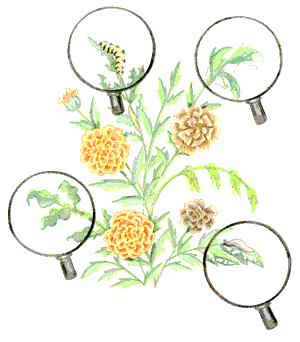
Marigold Problems |
|
| Symptom |
Probable Cause |
| No Blooms; Faded Blooms |
Temperature Problems |
| Few Blossoms; Excessive Foliage |
Too Much Fertilizer |
| Leaves Curled and Distorted |
Aphids |
| Holes in Leaves; Chewed Edges |
Caterpillars |
| Holes in Leaves and Flowers |
Japanese Beetles |
| Leaves Discolored; Distorted |
Leafhoppers |
| Deformed or Dwarfed Flowers |
Plant Bug |
| Leaves Stippled; Discolored; Webbed |
Mites |
| Gray Spots on Leaves | Botrytis Blight |
| Black Spots with Spore Bodies on Leaves | Leaf Spot |
| Plants Stunted and Yellow | Fungal Wilt |
| Dark Lesions on Stems; Roots Rot | Stem Rot |
| Flowers Yellow-green; Deformed; Shoots Spindly | Aster Yellows |
| Leaves Discolored and Distorted; Plants Stunted | Mosaic |
Discover the Most Common Marigold Problems, Including "Leaves of Marigold" Issues and Tips on "How to Stop Marigolds from Being Eaten"
1. No Blooms or Faded Blooms Due to Temperature
Lack of Blooms Due to Excessive Heat
High summer heat may slow, or even stop, blooming on marigolds. Once temperatures moderate, affected plants will begin to produce blossoms again. Triploid hybrids are somewhat resistant to heat problems. Two to three inches of organic mulch lowers the soil temperature and delays the effects of the heat of summer.
2. Blossom Color Fades Because of Temperature Changes
Fluctuation in temperatures from hot to cold causes marigold flowers to become paler than normal. This is most obvious in the darker mahogany French marigolds. This condition corrects itself when temperatures moderate.
3. Few Blossoms and Excessive Foliage Caused By Too Much Fertilizer
Marigolds respond to over-generous fertilizing or very rich soil by producing copious amounts of foliage and very few flowers. Limit feeding to one dose of slow-acting fertilizer dose per season. Plants with lush foliage will eventually produce blooms if they are not fed again.
4. Leaves Curled And Distorted Due to Aphids
While marigolds are not their favorite hosts, aphids sometimes attack them. Aphids are soft bodied pear-shaped insects, about the size of a pin. They may be white, green, yellow, red or brown. They typically cluster on young tender stems and under leaves and suck plant juices. This causes the leaves to dry, curl and turn yellow. Typically pests such as aphids attack a plant that is already stressed by drought, heat, lack of light or animal damage. For light infestations, spray the plant from underneath with a vigorous water spray in the early morning for several days to knock off the aphids. If they persist or the infestation is heavy, spray the affected plants with insecticidal soap or a pyrethrin/pyrethrum insecticide product as directed on the label. Try to address any situation that may be causing the marigolds stress.
For information on Controlling Aphids.
5. Holes in Leaves or Chewed Edges Due to Caterpillars
American marigolds are a target of caterpillars of various types. They devour plant foliage as they mature toward the time when they pupate. The simplest way to deal with them is to handpick them from the marigold plants and drop them into a plastic bag to discard in the trash. If a bed of marigolds is heavily infested with feeding caterpillars, spray the plant foliage with Bacillus thuringiensis (Bt) as directed on the product label. The caterpillars will ingest the bacteria, sicken soon, stop eating and die within a day or two.
For more information on Controlling Caterpillars
6. Holes In Leaves And Flowers Signals Japanese Beetles
If their favorite hosts, such as roses, are not available, Japanese beetles may settle for American marigolds. They chew holes in flowers and foliage. The most effective control is to hand-pick the beetles and drop them into a pail of soapy water to discard in the trash when they are dead. In cases where infestations are heavy spray the plants with a pyrethrin/pyrethrum insecticide product according the label instructions. Do not use Japanese beetle traps. They are so effective that they attract beetles from neighboring yards, many of which do not fall into the trap, compounding your problem.
For more information about Controlling Japanese Beetles
7. Leaves Discolored, Distorted Means Leafhoppers
Leafhoppers are strikingly colored, blunt-profiled bugs, 1/4 to 1/3 inches long, wedge-shaped, with wings held in a rooflike position above their bodies. They're very active, moving sideways or hopping suddenly when disturbed. Infested marigold leaves become cupped; their edges roll in toward the midrib and twist on their stalks. Branch tips and leaflets may wilt, which inhibits blooming. Leaves yellow and dry out, those that are exposed to bright sunlight turning purplish first. Dwarf types of marigolds tend to be injured more severely than taller ones. Some leafhoppers spread virus diseases such as aster yellows. Leafhoppers occur throughout the United States. If they are a recurring problem in your yard, lay white polyspun garden fleece over early spring plants as a barrier to deny leafhoppers access to the marigolds.
For more information see the file Controlling Leafhoppers
8. Deformed or Dwarfed Flowers Are Due to Plant Bug
The tarnished plant bug, is 1/4 inch long. An active, green to brown insect, it is mottled with markings of yellow, brown, and black. Look for a black tipped yellow triangle on each of its sides. It sucks the life from young marigold shoots and, especially, buds, simultaneously injecting a poison into them which causes deformed or dwarfed flowers. Tarnished plant bugs appear in early spring, becoming more numerous as the summer progresses. Use sprays early in the morning when bugs are least active. Spray bugs with a pyrethrin/pyrethrum insecticide product as directed on the label.
For more information see the file Controlling The Plant Bug
9. Leaves Stippled, Discolored, Webbed Due to Mites
Various mites, notably the two-spotted (or red) spider mite, sometimes attack marigolds. Mites are tiny spider-like pests about the size of a grain of black pepper. Either red, black, or brown, they feed by sucking plant juices, removing chlorophyll and causing small white dots to appear on the foliage. They also inject toxins into leaves, discoloring and distorting them. Foliage of mite infested plants becomes stippled, yellow, and dry, and sometimes fine webbing is visible. They thrive in dry, hot weather and target plants that are already suffering stress of some sort. Marigolds planted in the fall seem to have less trouble with mites because they experience less stress from heat.
To control mites, spray infested plants with a forceful spray of water every other day for three days, to knock them from the leaves. For serious, stubborn infestations spray affected plants with “superior” or light horticultural oil which will smother the mites. An alternative control is to spray affected plants with a pyrethrin/pyrethrum insecticide product as directed on its label.
For more information on see the file on Controlling Mites
10. Gray Spots On Leaves Are Caused By Botrytis Blight
This blight is a fungus which causes ashy gray spots to develop on bud scales and stems of marigolds and may cause plants to die back from the top. Pinch or clip off and discard young infected shoots in the spring as soon as they show wilt. As far as is practicable remove all old flowers and infected leaves. Do not compost plant parts; put them in the trash to avoid spreading the disease. Most homeowners simply destroy and discard inexpensive annual plants infected with botrytis to prevent the fungus from spreading to other, more valuable, plants.
For more information see the file Dealing With Fungal Disease on Flowers
11. Black Spots With Spore Bodies On Leaves Means Leaf Spot
This fungal disease causes irregular gray or black spots speckled with minute fruiting bodies to form on leaves. It starts on lower leaves and progresses upward. Varieties of American marigold are very susceptible, but French marigolds are either resistant or immune to this fungus. Pick off and discard infected leaves. Remove dead plant debris promptly from the garden, to reduce overwintering spore populations. Dig up and discard seriously infected plants together with the adjacent soil. Avoid wetting foliage while watering. Mulching helps prevent splash-borne infection.
For more information see the file Dealing With Fungal Disease on Flowers
12. Plants Are Stunted And Yellow Because of Fungal Wilt
A wilt disease caused by the fusarium fungus sometimes attacks dwarf and French marigolds. The disease works its way up from the base of the plant, causing leaves and branches to wilt and die. Remove and discard infected plants together with the soil immediately adjacent to them in the trash to avoid spreading the fungus. Do not grow plants continuously in the same soil; rotate plantings and change seed beds if possible. Control weeds in and around the garden. If space is limited and the same soil must be used yearly, select resistant marigold varieties. Sterilize tools used on infected plants by dipping them into hot soapy water with household bleach added.
For more information see the file Dealing With Fungal Disease on Flowers
13. Dark Lesions On Stems; Roots Rot Signal Stem Rot
A fungal stem rot causes dark lesions on marigold stems, often near the soil line. Plants wilt suddenly, leaves may turn yellow first. Roots are sometimes decayed. American marigolds are most susceptible to this problem, but French and dwarf varieties are not. Treat as described above. Lighten heavy soil with a mixture of perlite, vermiculite or peat moss and provide good drainage. Avoid overwatering. Space plants further apart to prevent crowding.
For more information see the file Dealing With Fungal Disease on Flowers
14. Flowers Yellow-green, Deformed; Shoots Spindly Because of Aster Yellows
Aster yellows is caused by a mycoplasma-like organism, similar to a bacteria. It is spread to marigolds by leafhoppers and aphids. Plant parts or entire plants may turn greenish-yellow, and be stunted or dwarfed. Leaves are often spindly. Flowers turn yellow, and may be dwarfed or aborted entirely. Plants wilt and die early. Pull up and discard in the trash all infected plants. Spray healthy plants with a garden sulfur fungicide to protect them from infection. Disinfect all tools with a spray of household disinfectant or dip them in a solution of hot water and household bleach.
15. Leaves Discolored And Distorted; Plants Stunted Due to Mosaic
Cucumber mosaic virus sometimes attacks marigolds, causing streaking or mottling of leaves and stunted growth. It is transmitted by aphids and its spread can be limited by controlling the aphids. There is no cure for this disease, so dig up and discard infected plants in the trash. Plant resistant varieties where possible. Disinfect garden tools and wash hands after handling infected plants. Don't smoke or use tobacco products when working with plants.
Your Marigold Questions Answered: Expert Tips for Every Common Problem
How do you treat marigold plant disease?
Treating marigold diseases requires a proactive and strategic approach to prevent infections and manage symptoms effectively. You could start by spraying a solution of baking soda, water, and a few drops of dish soap on affected plants. This natural antifungal spray helps control powdery mildew and other fungal diseases without harming the environment.
Additionally, water plants early in the morning so that any moisture on the leaves dries quickly, as damp conditions encourage fungal growth. For container plants, ensure proper drainage to avoid root rot and other waterborne diseases. Healthy marigolds need well-aerated soil and indirect sunlight. Keep the garden free from fallen leaves and debris, which can harbor disease spores, and consider rotating plants each season to break disease cycles. This holistic approach will help keep marigolds vibrant and resilient.
What is wrong with my marigolds?
If your marigold leaves are curling or warping, the culprit is often aphids—tiny, sap-sucking insects that feed on the leaves, distorting their shape and texture. To combat this, inspect your plants regularly and spray them with a strong stream of water to dislodge the aphids.
For persistent infestations, try an insecticidal soap spray or introduce beneficial insects like ladybugs that feed on aphids. Distorted leaves and yellowing foliage can also be symptoms of Aster Yellows, a phytoplasma disease. If Aster Yellows is affecting your plants, you'll notice yellowing leaves, malformed blooms, and stunted growth. Unfortunately, there’s no cure for Aster Yellows, and affected plants should be removed promptly to prevent the spread to healthy plants.
How do you manage marigolds?
To manage marigolds successfully, keep the soil evenly moist but avoid overwatering, especially in humid climates. Water deeply once a week, allowing the soil to dry out slightly between waterings. For container marigolds, monitor soil moisture closely; they may need daily watering during hot summer days. Fertilize every 4-6 weeks with a balanced, slow-release fertilizer to support continuous blooming. Deadhead spent blooms regularly to encourage new flowers, and provide adequate sunlight—marigolds thrive best in full sun but tolerate partial shade. Mulch around the base of plants to retain moisture and keep weeds at bay, ensuring your marigolds flourish all season long.
What destroys marigolds?
Marigolds are susceptible to a variety of pests, including slugs, aphids, caterpillars, thrips, and leafminers. These pests chew on leaves, stems, and buds, leaving marigold plants looking tattered. Marigolds can also be affected by viral diseases like Tomato Spotted Wilt Virus (TSWV) and Cucumber Mosaic Virus (CMV), which lead to stunted growth and distorted leaves. To manage these pests and diseases, consider using organic pesticides or introducing beneficial insects like ladybugs and lacewings. For viral diseases, prevention is key: keep your garden clean, control insect vectors, and avoid planting marigolds near infected plants. Consistent monitoring and quick action will protect your marigolds from these threats.
What is the main disease in marigolds?
One of the most common diseases affecting marigolds is Phytophthora root rot, a fungal infection that thrives in poorly drained, waterlogged soil. Symptoms include wilting, yellowing leaves, and stunted growth. The fungus attacks the roots, preventing the plant from absorbing water and nutrients, eventually leading to plant death. To prevent Phytophthora, plant marigolds in well-draining soil, avoid overwatering, and ensure containers have adequate drainage holes. If your plants show signs of root rot, remove and dispose of affected plants to prevent the spread to healthy ones. Regularly amending soil with compost or sand can improve drainage and reduce the risk of this disease.
What is eating all of my marigolds?
If you notice irregular holes in marigold leaves or chewed buds, snails and slugs are likely the culprits. These pests feed at night and are especially damaging to young marigold plants. To deter them, scatter crushed eggshells or diatomaceous earth around the plants, creating a barrier that snails and slugs avoid. Copper tape around pots also deters these pests by giving them a mild shock. Additionally, you can set beer traps in shallow containers to attract and capture slugs. Regularly inspect plants in the early morning or late evening, and manually remove any slugs or snails you find.
How to stop slugs from eating marigolds naturally?
To protect marigolds from slugs naturally, plant slug-repellent companions like garlic, mint, lavender, and thyme around your marigolds. These herbs release scents that deter slugs. You can also try a garlic spray made by steeping crushed garlic in water overnight, then straining and spraying it around your marigolds. Another natural solution is diatomaceous earth, which, when sprinkled around plants, creates a rough surface that slugs avoid. Maintain a dry, well-ventilated garden environment, as slugs prefer damp areas. Regular weeding and mulching with dry straw can also discourage slugs from settling near your marigolds.
